
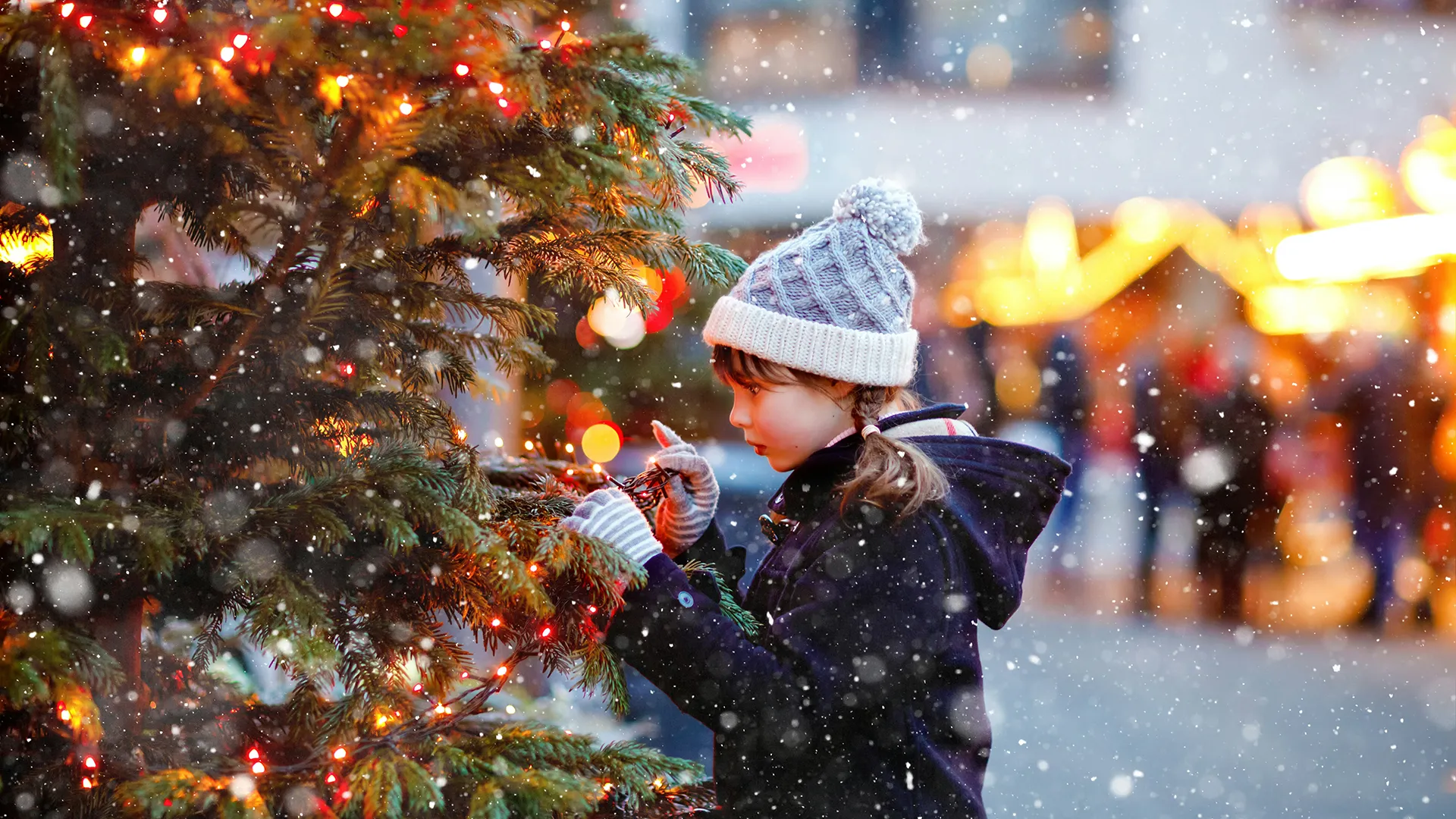
Every December, millions of people around the world gather around twinkling lights, exchange gifts, and celebrate Christmas with family and friends. Whether it’s the act of hanging stockings by the fireplace, preparing festive meals, or attending church services, these traditions are passed down through generations. But have you ever wondered why we do these things? What historical, cultural, or religious traditions have shaped the Christmas we follow today.
To understand why we celebrate Christmas the way we do, it’s important to first recognize that many of the customs associated with the holiday have roots in many cultural and religious practices. The modern Christmas holiday is a mix of pre-Christian winter solstice festivals, Christian teachings, and non-religious influences that have evolved over centuries.
Christmas is celebrated by millions around the world, yet how much do people really know about its origins and traditions? To find out, we asked a few people what they understood about the history of Christmas beyond presents and holiday cheer.
Lilly Caudillo, a student at Heritage Christian said, “Yeah, I know that Christmas is all about Jesus’ birth and that we celebrate Him. But traditions? No, I don’t really know anything about that. Most kids just see Christmas as a day for opening presents—getting what you want—rather than understanding the true reason behind the holiday, like how Jesus was born.” Her friend, Juliet Balyan, another student at Heritage Christian shared the same lack of Christmas knowledge by saying, “Jesus was the one who was born on Christmas Day, so that’s where Christmas comes from. The traditions? Saint Nick is the Santa we know today, and I remember hearing he was in a Coca-Cola commercial where his outfit was originally green but later changed to red. But that’s all I really know. I think commercials take away from the true meaning of Christmas. People just want gifts, and it’s become just another holiday in people’s eyes.”
These responses reveal that while many know Christmas celebrates Jesus’ birth, the historical roots behind its beloved traditions remain a mystery to some. So let’s dive deeper and uncover the stories behind the customs we celebrate every December.
Pre-Christian Influences
Long before the birth of Jesus Christ, people in Europe celebrated the winter solstice, the shortest day of the year, which typically falls around December 21-22 depending on the culture. These celebrations were often linked to the idea of the rebirth of the sun. In ancient Rome, the festival of the Saturnalia, was a week long festival honoring the god of Saturn. This would usually take place in mid-December, which consisted of feasting, gift-giving, dancing, and drinking. In Scandinavia, the Vikings called their festival Yule to celebrate the return of the sun, with traditions like burning wood and decorating it with symbols of growth. The ancient Egyptians would use this time to heal their god of sun–Ra.
Christian Influences
However, in Christianity, the focus shifted from the sun god to the idea that Jesus Christ is the “Light of the World.” Instead of celebrating the sun’s return, Christians believe that the birth of Jesus, who is often referred to as the light that overcomes the darkness, marks the true source of light and hope. This change happened in the 4th century when Pope Julius I declared December 25 as the official date for celebrating the birth of Jesus Christ. The date was chosen on the winter solstice festivals, which was already widely celebrated with feasts and festivities. By selecting this date, the Christian church was able to transform this popular celebration into a Christian holiday, emphasizing the birth of Jesus as the real event that brought light to the world. Over time, Christmas traditions grew, blending both religious and cultural practices, such as decorating with lights, feasting, and giving gifts. These traditions symbolized the light and joy that Christ’s birth brought to the world, replacing the worship of the sun with the celebration of the birth of the Savior.
Christmas Trees, Garlands and Mistletoe
So you may be thinking “sure that’s how the holiday came about, but then how did the decoration come about” well it’s not so different from what we have gone over. The Christmas tree we know today has some of its origin from the ancient Egyptians. The ancient Egyptians used to decorate winter conifers (a type of pine cone) made with wreaths as well as garlands to celebrate Ra, the sun god. They believed that winter came every year because Ra was sick. On the 21st and 22nd of December, during the solstice, the population used to celebrate Ra by filling their homes with beautiful evergreen trees. To them this showed Ra getting better. In Northern Europe, the druids, who were priests of ancient Celts, decorated their temples with evergreen branches to represent eternal life. The Vikings in Scandinavia also used evergreen mistletoe to represent its connection to the death of Balder. Balder was killed by the blind god Hod, who was deceived by Loki, and killed balder by hurling the mistletoe.
But utility Germany in the Victorian era truly shaped many of the Christmas trees we have today. Queen Victoria and Prince Albert played a particularly significant role in making these traditions popular, for instance Christmas trees. Prince Albert arranged for a Christmas tree to be displayed at Windsor castle. They would build a pyramid with wood and decorate them with evergreen, candles, and pictures of the royal family gathered around the tree. It is believed that Martin Luther, the 16th century Protestant, was the first to add lighted candles on the trees. The story goes that Martin Luther was walking home one night when he stopped and saw the twinkling stars above the evergreen trees. To recapture that moment to show his family, he stuck the lighted candles on to the branches of their tree.
Ornaments
You know those round plastic ornaments you decorate your tree with, well Germany made those too. People would hang fruit and nuts on trees after the leaves fall off to symbolize the hope of spring returning. By the 1800’s, a man named Hans Grenier started making glass ball ornaments (called baubles) the round shape representing the fruits and nuts. In the early 20th century Americans would decorate their trees with mainly homemade ornaments, while Germans still continued to use apples, nuts, marzipan cookies, and stringing popcorn after being dyed bright colors.
Gift Giving and Santa Claus
One of the best Christmas traditions is gift giving. Starting this custom was when the three wise men brought gifts to Jesus’ birth. Over time, the practices of gift giving became symbolic of God’s gift bringing his Son down to earth. In the Victorian era, gift giving became more personal, and the tradition of exchanging presents grew more in popularity.
Now in the 21st century, gift giving has become more commercialized and about giving the best, most expensive gift rather than based on traditions. Now giving gifts isn’t just from friends and loved ones, but from Santa Claus. But where did modern day Santa come from?
Well for starters his real name is Saint Nicholas, a fourth century bishop from Myra Turkey and he had a soft spot in his heart for children. Over time stories of his acts of kindness such as giving gifts to the poor, or secretly giving dowries (money for their husbands) to poor girls spread through Europe. But Saint Nick was soon to become Santa in the 18th century. Dutch people brought the tradition of “sinterklaas” ( a celebration of Saint Nicholas) to New York where the name Santa Claus came about. The modern day image of Santa Claus, with his iconic red suit, white beard, and jolly appearance, became widely popular from Coca-Cola advertisements from the 1930’s that helped shape how he currently looks in today. Before this, Santa’s image changed significantly depending on the region or culture. Early depictions of Santa showed him wearing different kinds of outfits, including a bishop’s robe or a more old, rugged fur coat, reflecting his origins in European fables and the tradition of Saint Nicholas. In the 1820s and 1830s, the American writer Clement Clarke Moore’s poem A Visit from St. Nicholas (commonly known as The Night Before Christmas) pretty much made the whole image of Santa as a jolly, chubby, man who traveled around in a sleigh pulled by reindeer giving gifts to children. Around the same time, the artist Thomas Nast began drawing Santa Claus for Harper’s Weekly, which influenced the way people imagined him, making his appearance more consistent and adding details like the North Pole workshop and a list of good and bad children, the modern Santa Claus we see today.
In Investigating the origins of Christmas traditions, it is clear that many of the customs we have today evolved over centuries, shaped by religion and culture. From Christmas trees to Santa Claus, gift giving to celebrating the birth of Jesus, these traditions have continued to bring joy and meaning to people of all ages. Although the commercialization of Christmas has reshaped how many people celebrate, its timeless traditions have endured, remaining central to this cherished holiday.

0 Comments