

Athletics can have a positive impact on a student’s life by teaching discipline, motivation, and perseverance. For many students, sports are much more than just an after-school activity. They become a major part of daily life and personal identity. However, when athletics are not balanced with strong academic support, they can also create challenges that make school harder.
For student-athletes across the country, the school day does not end when the final bell rings. Instead, it continues on the field, court, pool, or track, often late into the evening. While other students may already be home finishing homework, spending time with family, or getting ready for bed, student-athletes are often still at practice, games, or team meetings. With practices, competitions, and travel taking up several hours each week, student-athletes must constantly juggle schoolwork, sleep, and personal responsibilities. Although schools often promote sports as a path to discipline and success, some people question whether the large time commitment actually helps students academically or simply creates more obstacles.
The connection between athletics and academic performance has been debated for many years. Supporters of school sports believe athletics teach valuable lessons that help students succeed in school, while critics argue that sports distract students from their education. Those in favor of athletics point to studies showing that student-athletes often earn higher grades, attend school more regularly, and develop stronger time-management skills than non-athletes. Being part of a team requires commitment and responsibility, and these qualities also matter in the classroom. Student-athletes must learn how to plan ahead, prioritize assignments, and manage their time effectively in order to stay eligible and succeed both academically and athletically.
Supporters also argue that athletics give students a sense of belonging and motivation to stay in school. Being part of a team can help students feel connected, which often leads to better attendance and a more positive attitude toward learning. Knowing that poor grades could result in losing playing time or becoming ineligible encourages many student-athletes to take school more seriously. For some students, sports provide a reason to stay motivated during difficult times in their academic lives, especially if they struggle to stay engaged in school otherwise.
On the other hand, critics of school athletics argue that sports increase stress and take away time that could be used for studying or sleeping. Long practices, late games, and weekend tournaments can leave students tired and worn out. As a result, students may have trouble paying attention in class or completing assignments on time. For students who already struggle academically or lack access to tutors, quiet study spaces, or support at home, these challenges can be even harder to overcome. In these situations, the demands of athletics may worsen academic struggles instead of helping them. This raises an important question: do athletics truly support academic success, or do they sometimes do more harm than good?
Research suggests that participation in athletics can have a positive effect on academic performance when there is a healthy balance. A large review of over 100 studies found that sports had a small but noticeable positive effect on academic outcomes for children and teenagers, especially when sports participation did not interfere with schoolwork. This suggests that students who play sports may perform slightly better academically than those who do not, as long as athletics do not take up too much time. When sports are kept at a reasonable level, they can support, rather than compete with, a student’s education.
One reason athletics may help academics is because of eligibility rules. Many schools require student-athletes to maintain a minimum grade point average in order to compete. This rule encourages students to attend class, complete assignments, and stay on top of their schoolwork. Some students say this requirement motivates them to stay organized and ask for help when they are struggling. In addition, the structured schedule that comes with sports can help students develop routines. Having set times for practice, homework, and rest helps reinforce habits like discipline, responsibility, and consistency, which are all important for academic success.
Physical activity itself also plays an important role in learning. Studies show that regular exercise can improve focus, memory, and behavior in the classroom. Exercise increases blood flow to the brain, helping students stay alert during lessons. It can also reduce stress and support mental health, which is especially important during stressful times like midterms and finals. For many students, sports serve as a healthy way to release stress, allowing them to return to class feeling more focused and motivated. These benefits suggest that when athletic programs are well-organized and supported by schools, sports can improve a student’s overall educational experience.
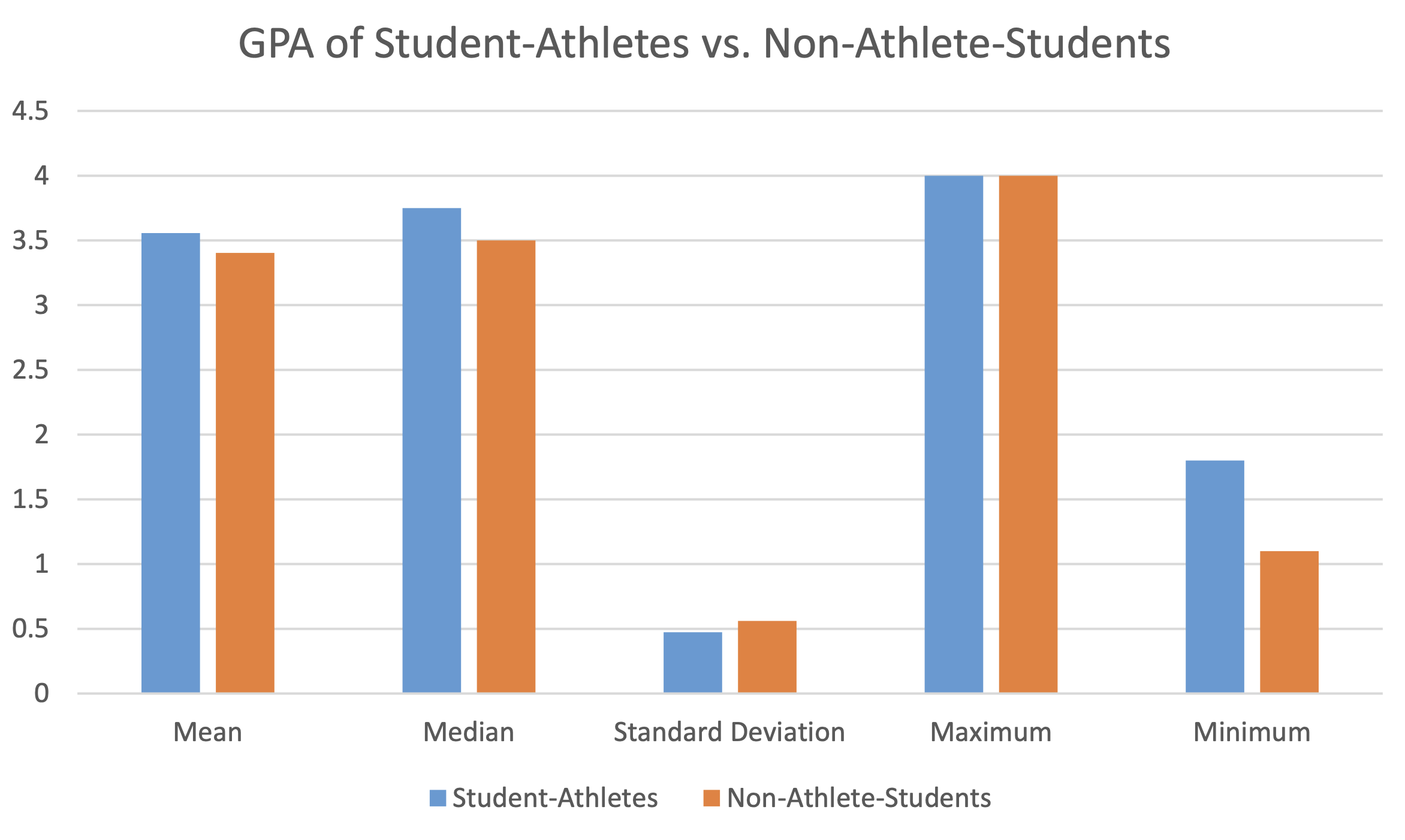
Data also shows a connection between athletics and academics. Comparisons of grade point averages between student-athletes and non-athletes show that student-athletes tend to have slightly higher average GPAs. This suggests that participating in sports does not automatically hurt academic performance. The data also shows consistency, meaning strong academic performance is common among many student-athletes rather than being influenced by only a few high achievers. This indicates that many student-athletes are able to successfully balance their responsibilities.
In addition to higher averages, student-athletes often show more consistency in their academic performance. Smaller differences in GPAs suggest that student-athletes are less likely to fall into very low academic ranges. While both athletes and non-athletes can earn high grades, student-athletes appear more likely to maintain steady performance throughout the school year. This stability may be connected to the routines, expectations, and accountability placed on student-athletes by their teams and schools.
Despite these positive trends, balancing athletics and academics is not always easy. Joshua Robinson, a high school student-athlete, explains how challenging it can be to manage both. He says his grades have stayed fairly consistent, but being a student-athlete leaves him with very little time to study or review material. According to Robinson, “The demanding schedule associated with sports sometimes makes it hard to keep up with work, even for students who are motivated and responsible.”
Robinson tries to manage his workload by completing assignments during his study hall so he does not have homework after practice. However, this does not completely reduce the stress. During busy academic periods, such as AP World History finals, balancing sports and studying becomes overwhelming. Robinson describes feeling frustrated and stressed but continuing to push himself because he does not want his grades to drop. His experience shows the pressure many student-athletes feel when trying to meet both academic and athletic expectations.
Robinson also points out that while coaches emphasize accountability and eligibility, academic support is often limited. Coaches make sure athletes maintain passing grades, but they do not always provide tutoring or extra academic help. This lack of support can make it harder for student-athletes to succeed academically, especially during intense sports seasons when time and energy are limited.
Research supports Robinson’s experience. While student-athletes often show slightly higher GPAs and better attendance, intense training schedules can lead to increased stress and fatigue. Highly competitive student-athletes are especially at risk of academic struggles due to long practice hours and limited study time. This suggests that the impact of athletics on academics depends largely on how much time and energy sports require.
Another high school athlete, Michael Alajajyan, describes the daily pressure of balancing athletics and academics as both motivating and exhausting. “It’s definitely made keeping my grades up more challenging because I have less time, but it gives me motivation to compete in my sport,” he explains. With practices often lasting until 7 or 8 p.m., Alajajyan notes that student-athletes are still getting home when other students are already preparing for bed. “We are at school pretty much all day, and then we still have responsibilities at home. You have to fit everything into one day, seven days a week,” he says. Because of these long days, studying often takes a back seat to completing immediate assignments. “I never really have time to sit and study. I barely have time to finish homework,” Alajajyan admits, recalling times when he prioritized due assignments over preparing for tests. The constant pressure of deadlines can feel overwhelming, especially during busy weeks. Still, Alajajyan acknowledges that athletics have strengthened his motivation to remain academically eligible, even as the demanding schedule continues to test his ability to manage time and stress.
Overall, athletics can support academic success when they are balanced with school responsibilities and supported by strong academic resources. Sports teach valuable life skills such as discipline, teamwork, hard work, and goal-setting, which benefit students beyond high school. However, without academic support like tutoring, structured study halls, academic check-ins, and flexibility during busy sports seasons, even motivated student-athletes can fall behind.

Schools play a major role in helping student-athletes succeed. Schools that truly prioritize academics alongside athletics show this by providing strong support systems for all students. When schools address both academic and athletic needs, student-athletes should not feel forced to choose between the two. Teachers, coaches, and school staff must work together to make sure students feel supported rather than overwhelmed.
In conclusion, athletics can both support and challenge academic success. While sports teach important life skills such as discipline, responsibility, teamwork, and time management, they also demand a significant amount of time and energy. The experiences of student-athletes like Joshua Robinson show that success requires balance, personal responsibility, and strong support from schools. When schools provide the right academic resources and encourage healthy time management, student-athletes are more likely to succeed both in the classroom and on the field.

0 Comments