
*Warning: This Article contains spoilers for The Thunderbolts*
Synopsis
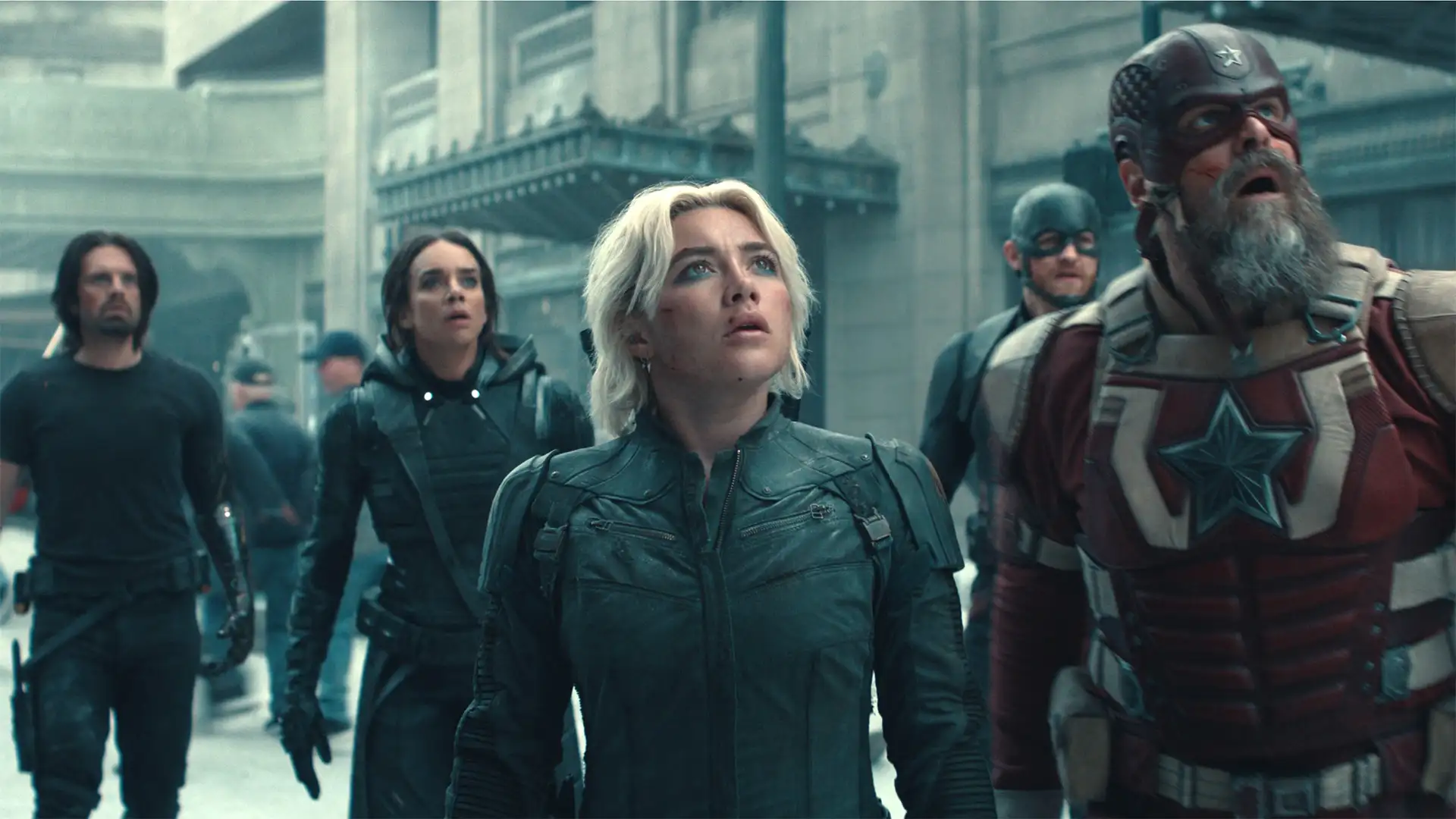
The Thunderbolts kicks off with a secret CIA op under Valentina Allegra de Fontaine, who’s been assembling a team of misfits: Yelena Belova, John Walker, Ghost, Red Guardian, and Taskmaster, for covert missions. However, things spiral when Valentina begins using them to cover up a darker agenda involving Bob Reynolds, aka the Sentry, whose power threatens global catastrophe.
Bucky Barnes, now serving as a U.S. senator, is part of an internal effort to impeach Valentina after intelligence leaks suggest corruption and illegal experimentation. When Valentina orders her soldiers to eliminate the Thunderbolts to cover her tracks, Bucky intervenes, saving the team and taking them into his custody. Realizing the depth of Valentina’s manipulation and the danger Bob poses in her hands, Bucky joins the Thunderbolts himself.
Together, they attempt to rescue Bob, only to be completely overwhelmed. Sentry’s instability, and the emergence of the destructive Void entity, turns the mission into a psychological and spiritual war more than a physical one. What follows is a journey not just to stop the Void, but to help Bob reclaim his identity before it’s lost forever.
Characters
Yelena Belova is drowned in grief after Natasha’s death. She masks her pain with sarcasm and emotional detachment, but it all unravels in one unforgettable scene: standing with Alexei outside the former Avengers Tower, she breaks down in front of him.
“Daddy, I’m so alone. I don’t have anything anymore. All I do is sit and look at my phone and think of all the terrible things that I’ve done. And then I go to work and then I drink and then I come home to no one and I sit and think about all the terrible things I’ve done again and again and again…”
Thunderbolts 2025
It’s a raw, human moment that pulls back the curtain on her emotional isolation, something many viewers can relate to. Her arc is about letting herself be vulnerable again, learning that found family can be real. She finally learns that she’s not alone.
John Walker is a man desperate for redemption. Now sidelined and dealing with the aftermath of his violent past, we see him trying to be a father, but failing. In a heartbreaking flashback, he sits by his child’s crib, reading an article titled “Fall of a Hero: The John Walker Story.” He’s not running from his past, he’s haunted by it. One scene where he subconsciously attempts to take his own life underscores just how far he’s fallen, and how much he’s trying to climb back up.
Bob remains the emotional and thematic core of the film. Formerly addicted to drugs, abused by his father, and manipulated by Valentina, Bob is forced into the public image of the Sentry: a bleach-blond, overly polished superhero persona he never wanted. The Void is not just an evil presence, it’s the embodiment of Bob’s self-hate. In a brutal climactic moment, he physically fights the Void, which turns out to be a metaphor for him beating himself up internally. It’s not the team’s strength that defeats the Void, it’s their willingness to see Bob as human. The Void isn’t a traditional MCU villain, it’s a metaphor. For addiction. For trauma. For shame. When Bob looks into the Void, he sees himself. And when the team helps him lock it away, not with fists, but with presence. It sends a message: healing isn’t about defeating darkness, it’s about refusing to face it alone.
Bucky Barnes starts the film in a surprising role: a senator actively working to impeach Valentina. He’s older, quieter, but still carrying the weight of a lifetime of trauma. At first, it seems like he’s finally detached himself from violence and wants to make change through politics. But when he learns of Valentina’s true motives and plot, Bucky makes a snap decision: he joins The Thunderbolts group. What makes Bucky’s character special in The Thunderbolts versus Captain America The Winter Soldier is that in the ladder, he is treated as the Winter Soldier: a cruel superhuman designed to kill, while in The Thunderbolts, he is treated as Bucky Barnes: a human.
Ghost and Alexei (Red Guardian) play powerful supporting roles. Ghost remains quiet but observant, her own emotional detachment acting as a mirror to Yelena. Alexei brings levity with his comedy, but in moments like his gentle fatherly exchange with Yelena, we see he understands the pain of being broken, and not being able to fix your child’s sadness. Neither steal the spotlight, but both round out the group’s dynamic beautifully.
Taskmaster meets a tragic and quick end within the first 10 minutes of the film, killed off during the Thunderbolts’ failed mission. Her death sets the tone: this movie is not about clean wins, it’s about messy, emotional survival.
Mental Health Themes
One of the most striking things about Thunderbolts is how boldly it leans into the emotional and psychological wounds of its characters. Unlike traditional superhero films that hardly go over trauma, Thunderbolts places mental health at the center of its story, without making it feel like a lecture.
Bob’s story is the emotional core of the film. His past addiction, forced transformation into the Sentry, and deep self-loathing are haunting. Valentina stripping him of his identity, down to his clothes and hair, feels like a violation of his personhood. When Bob lashes out as the Void, it isn’t just a power surge; it’s years of repressed pain, shame, and confusion erupting. In a sorrowful moment, he literally beats himself, because he believes he deserves it. That’s what the Void feeds on: self-hatred. And that’s what makes his eventual rescue so powerful. The Thunderbolts don’t defeat him, they stand by him. They remind him he’s not alone.
Yelena’s pain is quieter, but no less intense. Since Black Widow, we’ve watched her hide behind sarcasm and violence. In Thunderbolts, the mask finally slips. Her breakdown is raw, vulnerable, and deeply human. She’s not grieving Natasha anymore, she’s grieving the loss of herself. So many viewers will see themselves in her depression, her going through the motions of life just to feel something again. Her arc isn’t about saving the world, it’s about choosing to keep going, even when nothing feels okay.
John Walker’s journey tackles shame, guilt, and masculinity in crisis. Once the face of America’s failed attempt to replace Steve Rogers, he’s now a man with a fractured family and a haunted conscience. The film doesn’t glorify his mistakes, but it doesn’t throw him away either. It lets him hurt, reflect, and try again. That’s a message people need to see: your worst moment doesn’t have to be your final one.
What makes Thunderbolts special is how it handles these mental health narratives with empathy. No one is magically “fixed.” Instead, they find strength in each other, in shared pain, in chosen family. The film reminds us that healing isn’t easy, redemption isn’t perfect, and even the most broken people are still worth saving.
What Makes the Movie Special
What makes Thunderbolts different from the standard Marvel formula is that it trades flashy heroism for emotional reality. This is a found family story, but not in the “we hugged and fixed everything” way, it’s real, messy, and honest. The Thunderbolts don’t click; they clash. They don’t always like each other, but they show up when it counts. The scene where they’re fleeing Sentry during their first failed mission is pure chaos, but it’s executed with such intensity and emotion that it doesn’t feel like just an action set-piece, it feels like survival. Unlike the original Avengers, The Thunderbolts eventually begin to feel like family, rather than work friends. The film also makes a point of showing that these characters aren’t replacements for the Avengers, they’re the world’s last option. That difference is what gives the movie its edge.
Exciting Look at the MCU’s Future
The post-credit scene delivers a subtle but great shift in the MCU: the Fantastic Four’s ship breaching Earth’s atmosphere. It doesn’t need dialogue, the image alone sets up Fantastic Four: First Steps and Avengers: Doomsday in a way that feels earned, not forced.
But more importantly, Thunderbolts redefines what the MCU can be: not just about epic battles, but about emotional stakes. It proves that character-driven stories can still live in a world of gods and monsters, and sometimes, the most powerful heroes are the most broken ones.
Conclusion
The Thunderbolts is not your typical Marvel movie, and that’s what makes it special. It’s a film about people who’ve lost everything, trying to save someone who’s on the verge of losing himself. In doing so, they begin to save themselves. It’s messy, painful, and heartfelt, and it might just be one of Marvel’s most human stories yet.

0 Comments