

Since its first airing in 2022, the Netflix anthology series Monster has quickly risen in popularity for many different age groups. Some watch the show and are utterly repulsed, while others, specifically the younger generation, make TikTok edits of the killers/actors who portray killers— glamorizing their subjectively attractive looks.
So, the question lies: Is the show educating the general public that watches it or promoting the historical darkness embedded in it?

Ryan Murphy attending the Emmys. (Christine Chew)
First and foremost, let’s discuss the style of the show’s creator and director, Ryan Murphy. Murphy is a renowned creator/director whose work not only pertains to the Monster show, but it also stretches to the popular FX series American Horror Story that he worked on alongside Brad Falchuk since 2011. If you have watched even one episode of American Horror Story (AHS), you would understand the kind of film clay Murphy likes to mold with. The majority of his work is famous for being macabre, eerie, and incredibly enamoring, considering only the first season of AHS accumulated 32.83 million views. The Monster series also tends to collect millions of views within days of each season’s release.

Evan Peters, who portrays Jeffrey Dahmer in Monster season 1 and many other characters in Ryan Murphy and Brad Falchuk’s American Horror Story. (Netflix)
Popularity doesn’t become a concern unless it’s popular for a not-so-good reason. So what does this show consist of that is so appealing? The Monster series is classified in the true crime genre, so it’s easy to guess the things one would see and hear when they watch it. The first season, Dahmer, centers around the American serial killer Jeffrey Dahmer when he was on his killing streak from 1978-1991. The second, The Lyle and Erik Menendez Story, is about the famous brothers who murdered their parents and the following court hearings that lasted several days. The third, yet not the last, focuses on another American Serial Killer Ed Gein, who was famous for collecting different skins to wear–literally. And the upcoming season, featuring Lizzie Borden, will tell the story of how she murdered her father and stepmother with an axe in 1892 according to TV Guide.
It’s evident that the show doesn’t shed light on light topics. These things are the very issues that have plagued society with fear since Jack the Ripper headlined every local newspaper in England. Combining popularity and fear factor, you get the common fascination with dark historical truths; and the more it is known that people find interest in this, the bigger the heyday for true crime documentary productions. People continue to feed off of these shows, eating up every last episode and convincing themselves that they’re forensic psychologists by association.
What is so intriguing about a true crime show anyway? Some might argue it’s just morbid curiosity. Others might watch the shows because their favorite heartthrob is the lead (something Murphy has repeatedly done for casting over the years). Maybe it’s the fact that what they see in the Monster series isn’t all true— it’s a matter of fiction and facts interwoven with each other— which is one of the leading issues with the series from the viewpoint of hardcore history nerds.

Nicholas Chavez as Lyle Menendez and Cooper Koch as Erik Menendez during Monster season two– the season Erik Menendez himself dragged for its inaccuracy. (Miles Crist)
The Viewer’s Perspective states that season three of the show depicts Ed Gein as a necrophiliac, but in real life this was never proven— in fact, Gein denied it in the first place. Ed Gein killed his brother Henry in the show; in reality, he died of asphyxiation during a marsh fire.
As grotesque as the original stories are, most true crime producers tend to fabricate more of the story to add more appealing features to the audience. The audience that enjoys true crime stories usually don’t mind this either considering it gives them more showtime. “The whole point of the show being so eventful is because it’s all for entertainment value,” homicide detective Michelle Cisco says in an interview regarding Monster.
Earlier in this article, it was mentioned that the show’s younger audience makes TikTok edits of the killers or their actors. That’s right, TikTok edits, and this is why it might be viewed as a problem that Murphy casts pretty people as crazy people. Now, not only is the show itself entertaining, it also has (in a way) made serial killers have a better image. “The attractive actors and added features make people sympathize for the killers,” Cisco also said.
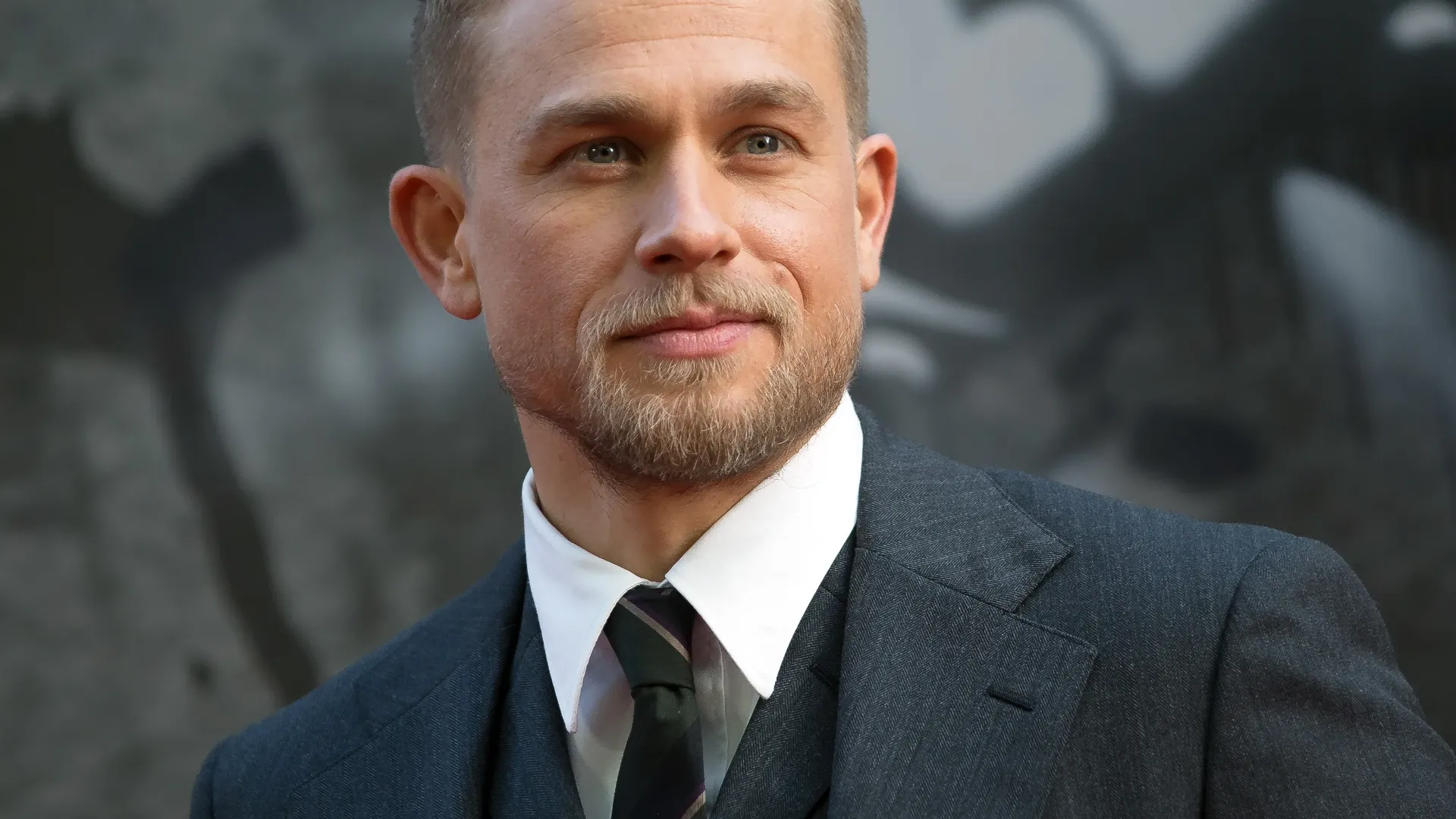
Charlie Hunnam– the actor portraying Ed Gein in Monster season three. (Daniel Leal-Olivas)
With said sympathy, viewers tend to have a desire to understand the “why” of the exigence of the crimes. Though it might not be a bad thing to want to understand the “why”, the reason why many killers exist today is commonly because of things people don’t normally suspect— maybe true crime TV shows… or even video games.
During the interview, Cisco mentioned one of the crimes she investigated a few months ago involving a 20-something-year-old man with severe mental issues who murdered two innocent people in their home because he “believed he was playing a Call of Duty game” in his house. While Call of Duty is a video game, the relevance is all the same. It involves violence that people eventually get used to seeing. The phrase “monkey see, monkey do” has been a major cult following tactic in humanity since the beginning of time. Keep in mind that this man had mental issues, and him playing the video game triggered his action. Obviously not all the youth have mental issues, but many people— young and old— still do, and watching this show certainly doesn’t help the matter. Regardless of lower crime rates, true crime content can create perceptions of increased threat.
AP News suggests that “the rise of the antihero is at play”, which leads to these influenced killers whose mental issues don’t always revolve around a desire to kill. Retired officer Kim Cisco brings in the idea that many of these kinds of killers “are after the notoriety” that past serial killers harvested as a result of their actions. “Some of the influenced killers think, ‘Well, if he (any serial killer) can do it, so can I’,” Cisco says. Others, mostly the younger portion, want to do it because they idolize these killers for whatever reason and desire to follow in their footsteps; these are similar to the individuals that marry those on death row or send love letters to convicts. And, as crazy as it might seem, some want to please creatures of urban legends, like Morgan Geyser and Anissa Weir, who stabbed their friend Payton Leutner 19 times because it was “an effort to please the mythical horror figure Slender Man,” according to People.
These people, all with their own special struggle, exist, get caught, and get sentenced. The downside of the fact that these killers are mentally unwell means they head over to a mental institution. While this seems odd to label as a downside, Michelle Cisco continues with the fact that “people are not getting enough help for these things, institutions do not take enough precautions because they only care to ‘get ‘em in, and get ‘em out’,” which eventually means that these killers get so much as a slap on the wrist and are let back on the street. There is little treatment (usually involving prescribed medication and some therapy), so not only are they being released prematurely or when they’re not supposed to be at all, they hardly even get the help they need before they get released.
Mainly the statistics of the matter show whether the Monster series is educating those that watch it or whether it’s exacerbating the crime in the world that’s exposed to the show. The major downside of the industry producing these movies is not necessarily the crime rates, because not all people that watch it commit crimes, but rather the fact that people begin to normalize killing. Well, at least they began to get used to it a lot easier. Many years ago, when Alfred Hitchcock’s Psycho was first released in theaters, people were aghast. It wasn’t normal to that generation in any way— people rarely even spoke about murder, let alone see it onscreen.
Fast forwarding to the present day, murder has become a very run-of-the-mill sight onscreen and on news broadcasting systems. People watch shows like Monster and don’t even realize how much it is being programmed into the resets of their minds. There is no longer any shock value in murder unless it is a major figure in the world or done in a gruesome way.
Is the Monster show a culprit of this alongside other true crime shows and documentaries? Maybe. While there’s no ultimate yes as an answer, many can say that it has definitely contributed to the root issue. It has exposed the darkness of the world by digging deep into the horrors that existed a hundred years ago up to today.
The kicker is that people obviously enjoy this— a lot. They binge the show, fall head over heels with the main actor, make a TikTok edit or two, and eventually let it fade out of their memory. And who’s to say that they’ll experience it? Kim Cisco relayed that on average, people come across 1-5 murderers in their lifetime– possibly more. What would they do if they came across an actual murder? Will they be shocked enough to let it bother them for months, even years on end? Or will they get surprised and move on too quickly?
The shock value in these shows for the audience come from not only the little amount of fact, but the excessive fictional additions to make the story longer and more interesting. Viewers rarely take into consideration the atrocities of the show, and even if they did, it isn’t something that they’re unfamiliar with— as they have become used to it the more they watch the shows that are continually put on air.

0 Comments